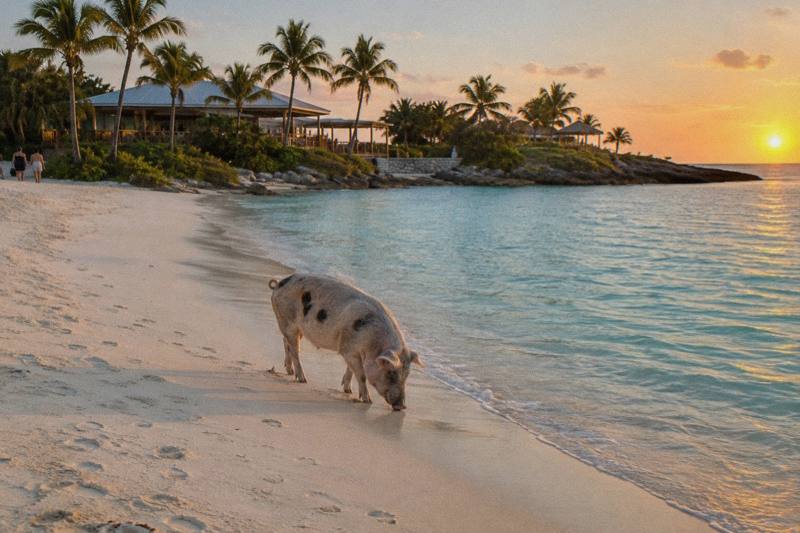
Why Are There Pigs In The Bahamas? The Origin Stories
No one knows for sure how pigs ended up on a remote cay in the Exumas. The official tourism page says as much, and the two stories people tell are both legends.
Short answer
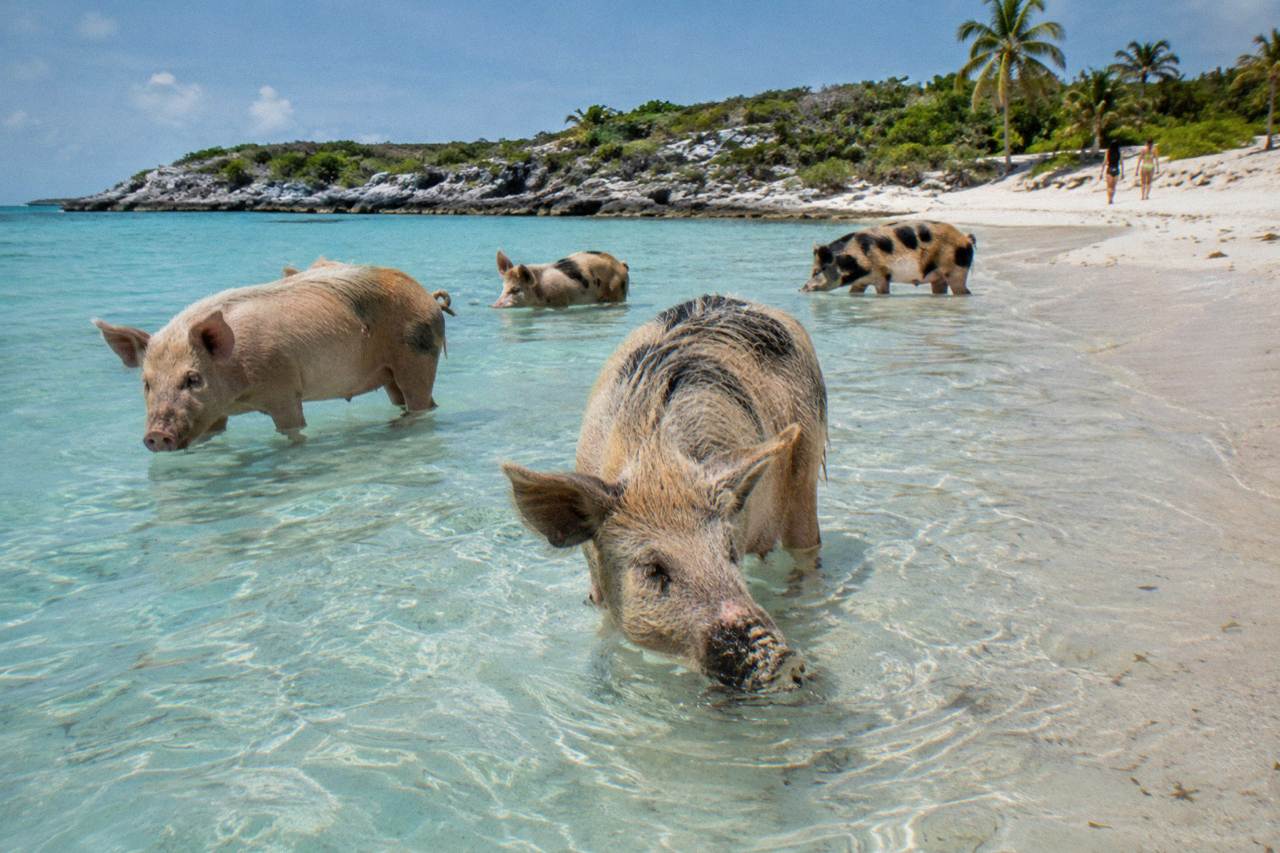
The Bahamas swimming pigs are not native. The Bahamas Ministry of Tourism says it is not known for sure how they arrived: the commonly told stories are that sailors left pigs on the cay as a future food supply, or that they swam ashore from a shipwreck. About 20 pigs and piglets live on Big Major Cay today, and the Rose Island herd near Nassau is a separate colony.
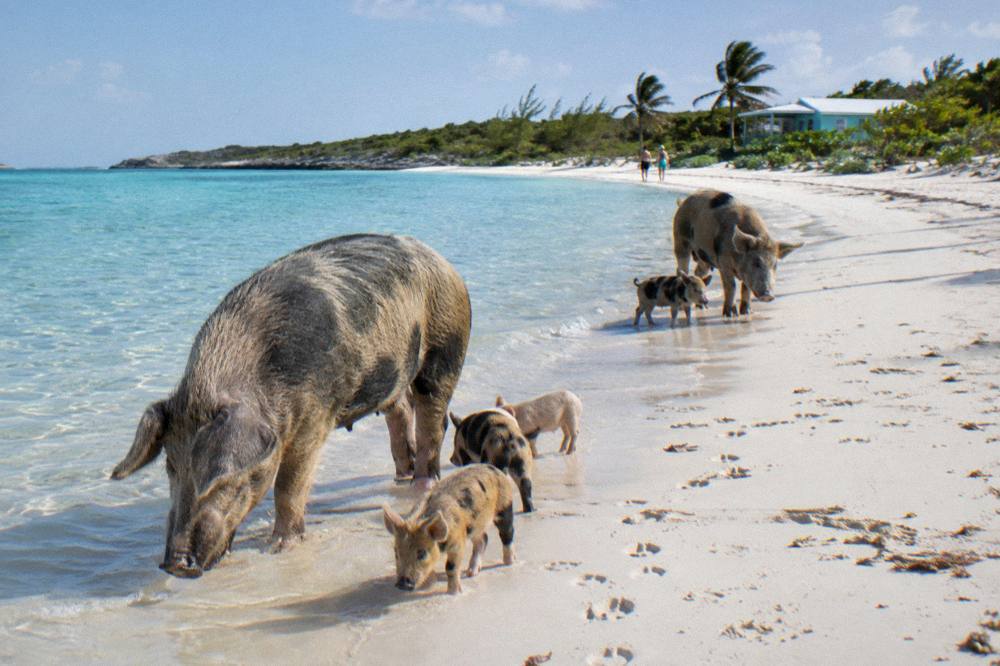
Nobody knows how the pigs got there, and the country's own tourism ministry says so plainly. On an uninhabited sliver of the Exumas called Big Major Cay, a herd of pigs and piglets lives year round and swims off the beach. The official home of the swimming pigs page from the Bahamas Ministry of Tourism confirms the basics: the pigs are not native to the cay, how they arrived is genuinely uncertain, and about 20 pigs and piglets live there today with daily visits from tour boats.
That honesty is refreshing, and it is also the reason this guide exists. Search for the origin of the swimming pigs and you will find confident, contradictory answers: sailors left them, a shipwreck stranded them, a farmer released them, a business venture seeded them. Some of these are stories people tell on the dock. Others are inventions, complete with names, dates and quotes that appear nowhere in any official record. This page sticks to what is verifiable, marks the legends as legends, and then answers the practical questions that follow: why the pigs swim, how the herd near Nassau differs, how far the famous beach actually is, and which trips from Nassau reach each colony.
Where Did The Swimming Pigs Of The Bahamas Come From?
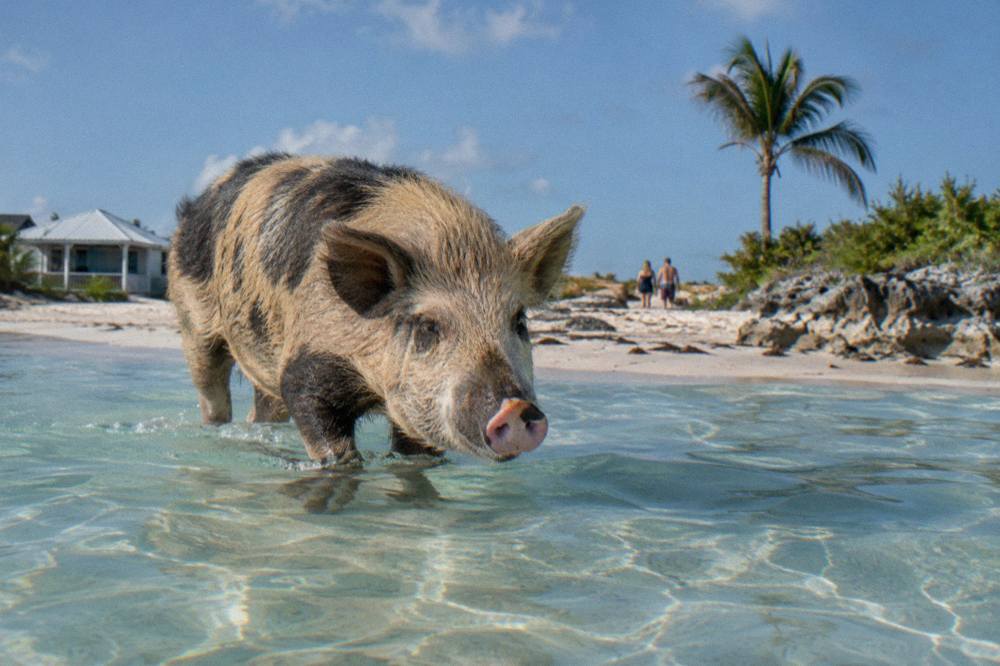
The pigs are not native, and the official answer is that nobody knows for certain how they arrived. The Bahamas Ministry of Tourism states that the origin is uncertain and offers two commonly told stories: sailors left pigs on Big Major Cay, perhaps as a future food supply to collect later, or the pigs swam ashore from a nearby shipwreck. Neither story is confirmed, and no record settles it.
Those two legends are worth holding apart, because they get blurred together constantly. The sailor story is economic: one story says sailors left them there. The shipwreck story is dramatic: a vessel carrying livestock went down or ran aground in the Exuma Cays, and the pigs escaped and swam to the nearest shore. It is the version people love to repeat, and it may even be true, but the official page gives both stories equal, unconfirmed weight.
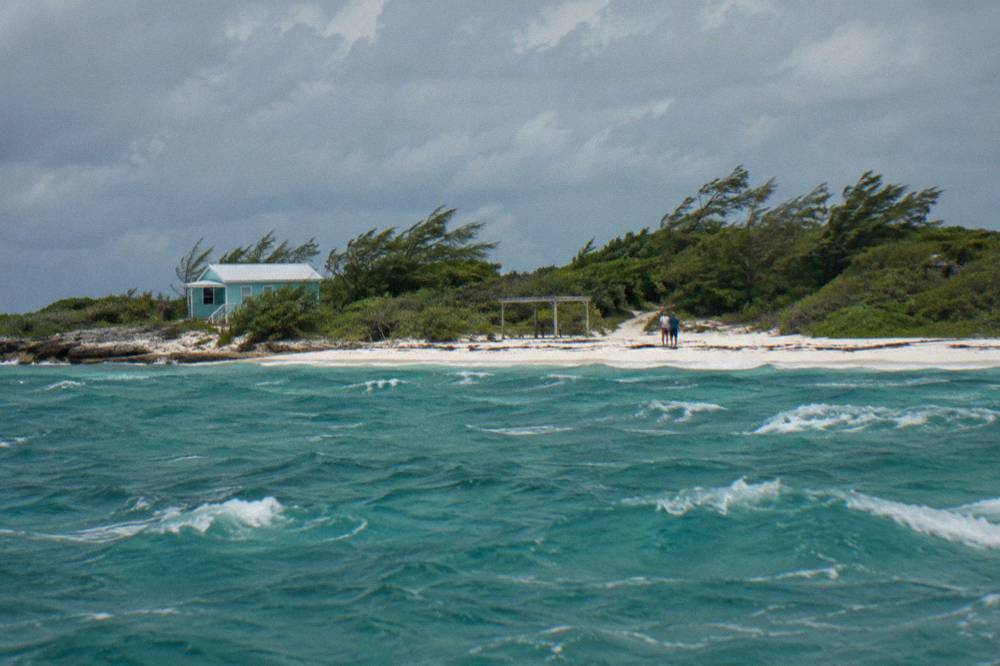
What the official page does settle is geography and scale. Big Major Cay is uninhabited, meaning no one lives there, tends the herd, or fences it. The roughly 20 pigs and piglets there live wild, and the daily pattern of tour visits is the main human footprint on the cay. For the full picture of that island, see the Big Major Cay Pig Beach guide, which covers the beach, the anchorage and what a visit looks like in practice.
A quick note on what this article will not do: it will not name an owner, a year, a storm or a captain. Any version of the origin story that comes with precise invented details is a red flag, not a source. The honest summary, straight from the country's own tourism authority, is simpler and stranger: the most famous pigs in the Caribbean appeared, thrived, and nobody wrote down why.
Why Do The Pigs Swim Out To Boats?
Pigs swim because they are strong natural swimmers and because they have learned, over years of tour visits, that arriving boats can mean food. Pigs will enter the water willingly and even paddle out toward approaching vessels. Operators describe the swimming as learned behavior around boat traffic rather than something mysterious about this particular herd.
The mechanics matter more than the folklore here. Pigs can swim, full stop: they dog paddle, they hold their snouts above the surface, and they float surprisingly well. Wild pigs in many parts of the world cross rivers and bays. What makes Big Major Cay unusual is not aquatic ability but motivation. A herd on a small uninhabited cay with regular boat visits, where food has repeatedly arrived by water, learns that the sound of an engine is worth swimming toward. Behaviorists would call it conditioning; tour marketing calls it magical. Both are describing the same thing.
That learned pattern is also why safety briefings exist on every legitimate trip. Pigs can nip when food is present, per traveler and press accounts, and a large animal swimming at your floating snack is a moment that deserves respect, not a selfie first. The only feeding guidance that belongs on any trip is to follow your guide's instructions on feeding: guides control what happens, when, and how close you get. For a fuller treatment of injuries, briefings and family suitability, the Is Swimming With The Pigs Safe guide covers the ground in detail.
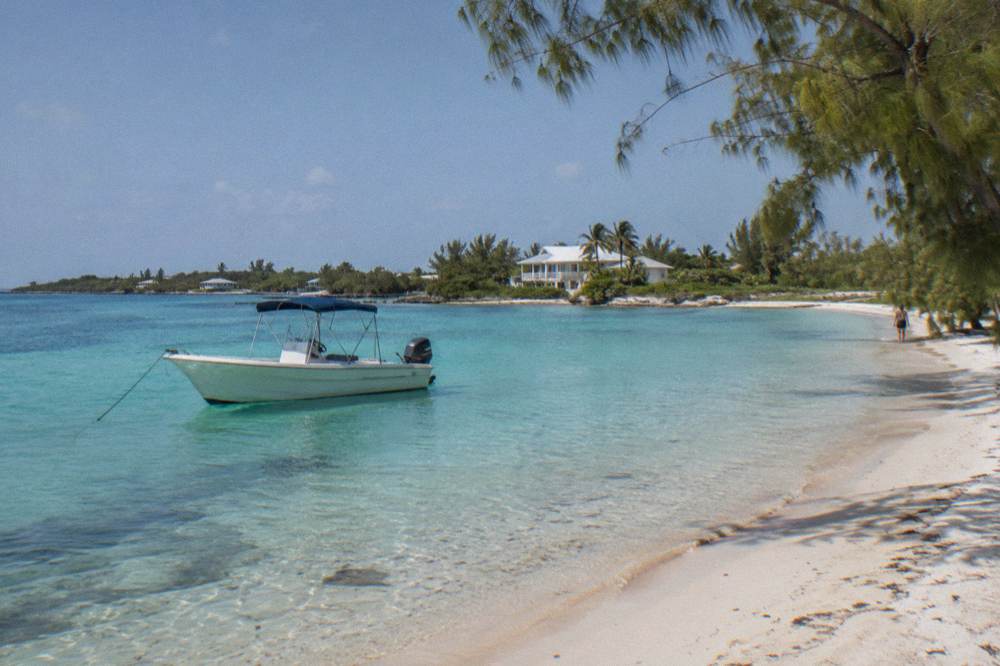
If the sight of pigs paddling in gin-clear water is the image that brought you here, these are the trips that deliver it most directly from Nassau:
The Exuma island hopping trip run by Born Free Charters, carries a 4.8 rating from 688 reviews and runs 8 hours from Nassau, with lunch at a restaurant and local beer on board. Close to Nassau, Da Pig Beach Nassau's private beach club escape is rated 4.7 from 1,680 reviews, from $129, and pairs the pig swim with a Bahamian lunch and one soft drink.
Are The Rose Island Pigs The Same Herd?
No. The pigs at Rose Island, twenty to thirty minutes by boat from Nassau, are a separate colony kept at a private beach club setting, not the famous wild herd of Big Major Cay in the Exumas. The official tourism page treats Big Major Cay as the primary home of the swimming pigs, while Rose Island runs on its own local herd closer to the city. For the practical side of planning a visit, our guide on whether you can still swim with the pigs in the Bahamas covers current tour options from both Nassau and the Exumas.
This is the single most common confusion among Nassau visitors, and it shapes what you should book. The famous photographs, the uninhabited cay, the roughly 20 wild pigs and piglets, that is Big Major Cay, roughly 82 to 86 miles southeast of Nassau by operators' reported figures. Rose Island is a different proposition entirely: a short hop across the harbor, a private beach club with loungers, restrooms and a bar, and a small herd of local pigs that greet arriving boats on their own stretch of sand. The Nassau Cruise Port's Rose Island page positions it exactly that way: a short-trip day away from the port, minutes rather than hours from the ship.
Neither colony is the "real" one in a way that should embarrass either. The Rose Island pigs are tamer by setting and closer by miles, which makes them the practical choice for cruise days and families with small children. The Big Major Cay pigs are wilder, farther, and the herd the country's tourism marketing actually showcases. The comparison of travel time, price and experience is laid out in the Exuma versus Rose Island pigs guide, which is the right next read if you are deciding between the two.
How Many Pigs Live On Big Major Cay Today?
The Bahamas Ministry of Tourism states that about 20 pigs and piglets live on Big Major Cay, an uninhabited cay in the Exuma Cays that they visit daily as part of organized day trips from Nassau and the Exumas. The number is approximate and seasonal: piglets are born, and the herd is not managed or counted like livestock.
An approximate headcount for a wild herd on an uninhabited island is inherently soft, and the tourism ministry's "about 20" is the only official figure. What is firmer is the pattern around it. The pigs receive daily visits, meaning the herd's routine is built around boat arrivals. The cay has no residents, no shop, no staffed facility. Tour listings from the Exumas consistently describe the same scene: pigs on the beach, pigs in the shallows, pigs approaching anchored boats.
| Fact | Official / reported position |
|---|---|
| Location | Big Major Cay, Exuma Cays, uninhabited |
| Herd size | About 20 pigs and piglets, per the Ministry of Tourism |
| Origin | Not native; uncertain, with two commonly told stories |
| Visits | Daily organized trips from Nassau and the Exumas |
| Management | None stated; the herd lives wild |
| Rose Island | Separate colony, separate operators, 20 to 30 minutes from Nassau |
The listed Exuma stops on the official page give a sense of how the pigs fit into a full day: Thunderball Grotto, the nurse sharks of Compass Cay, Stocking Island, Blow Hole Cay, the rock iguanas of Bitter Guana Cay, lunch at Staniel Cay, and the pigs of Big Major Cay. A day trip is not a pig visit with filler; it is a circuit of the Exuma Cays in which the pigs are the headline stop. The what a day trip to the Exuma pigs looks like guide walks through the whole route hour by hour.
How Far Is Pig Beach From Nassau?
Operators' reported figures put Big Major Cay roughly 82 to 86 miles southeast of Nassau, with speedboat crossings of about one to three hours one way depending on the vessel and the sea state, and small plane flights to the Staniel Cay area of about 30 to 45 minutes each way. Rose Island, by contrast, is a reported 20 to 30 minute boat ride from the Nassau waterfront.
Distance is the hidden variable in pig trip planning, because the photographs make every beach look equally close. They are not. The Exuma run is open water for long stretches, and operators report choppy conditions with steep short-period waves when winds exceed about 20 knots, which is why December to April is reported as the calmer window and why weather cancellations and reschedules are a normal part of Exuma operations, not a sign of a bad operator. The plane option trades the bounce for a boarding time: fly to Staniel Cay in roughly half an hour, then transfer to a local boat for the pigs.
| Route | Reported distance or time | Notes |
|---|---|---|
| Nassau to Big Major Cay by speedboat | 82 to 86 miles, about 1 to 3 hours one way | Open water; seasickness risk in wind |
| Nassau to Exumas by small plane | About 30 to 45 minutes each way to the Staniel Cay area | Plus a local boat transfer |
| Nassau to Rose Island by boat | 20 to 30 minutes | Harbor-adjacent; more flexible year round |
That third row explains most Rose Island itineraries. A 20 to 30 minute crossing means a four hour tour can deliver a beach club, a pig encounter and still have you back at the cruise port with margin. The Tour Daddy water taxi listing, for example, is from $89 per person over 4 hours, rated 4.5 from 656 reviews, and is deliberately lean: beach entry fee and guide, no meal. The other end of that same family is the Sandy Toes 6-hour day, rated 4.7 from 1,282 reviews, from $258, with a full Bahamian barbecue lunch and standard alcoholic drinks included. The costs of each format are broken down in the how much does swimming with pigs cost guide.
The Born Free Charters Exuma island hopping day, rated 4.8 from 688 reviews and from $438.90 for an 8 hour itinerary, includes lunch at a restaurant, local beer for passengers 18 and older, soda, bottled water and snorkel equipment. It departs from the Carnivale Bahamas meeting point. Like every Exuma speedboat day, it is weather dependent, and free cancellation is listed. More on the plane versus boat trade-off sits in the Nassau to Exuma by plane or speedboat guide.
Can You See The Pigs On A Nassau Cruise Day?
Yes, but the choice of colony matters more than anything else. The Rose Island herd is a reported 20 to 30 minute boat ride from the port area, which fits a standard call comfortably. The Exuma run is a full day of 6 to 8 hours or more, with returns reported around 4:30 to 5:00 PM, which is tight against typical all-aboard times of 30 to 90 minutes before sailing.
Excursion menus vary by cruise line and sailing, so never assume a named line runs a specific pig trip. What is stable is the arithmetic. Ships dock at Prince George Wharf, and an independent booking is simply a roster listing you reserve yourself. A Rose Island trip of 3 to 4 hours leaves buffer for shopping, lunch or the pool deck. An Exuma speedboat day spends most of the port call at sea, and while plenty of cruisers do it, it leaves little room for a delay. The swimming pigs on a Nassau cruise day guide and the port-specific Rose Island or Exuma from the cruise port guide cover the decision in full.
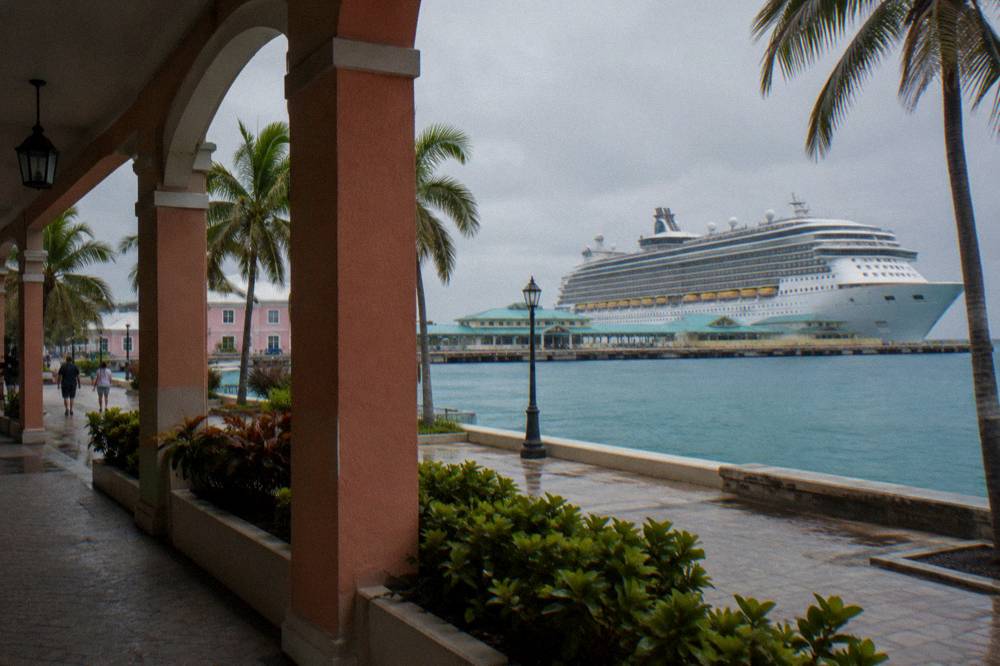
For a port day, the multi-stop format splits the difference nicely: a 4 hour trip that adds snorkeling and turtle stops to the pig beach without the Exuma mileage.
The 3 Islands tour by Shore To Shore Bahamas is the most reviewed pig-family trip on this site's roster, 4.3 from 3,591 reviews, from $122.85 per person over 4 hours, with lunch and drinks listed, guided in both English and Spanish, and visits to Green Cay and Rose Island by speedboat and catamaran. It starts at its meeting point rather than offering pickup, so plan the walk from the port accordingly.
Which Tours Take You To Each Pig Colony?
Rose Island trips run 3 to 6 hours from roughly $75 to $258 depending on inclusions, while Exuma day trips from Nassau run 8 hours in the $378 to $850 range on this site's roster, with a private plane charter at from $4,000 per group. The cheapest listed Rose Island day is the Sand Dollar resort option from $75; the most reviewed Exuma trip is the Born Free island hopping day at 688 reviews.
The table below pulls the roster's endpoints so you can see the two colonies as distinct markets rather than one product at different prices.
| Trip family | Listing | Price | Duration | Rating |
|---|---|---|---|---|
| Rose Island budget | Sand Dollar Resort Day | from $75 | 4 hours | 4.0 from 137 reviews |
| Rose Island water taxi | Water Taxi, No Meal | from $89 per person | 4 hours | 4.5 from 656 reviews |
| Rose Island with lunch | Private Beach Club, Lunch | from $129 | 4 hours | 4.7 from 1,680 reviews |
| Multi-stop combo | 3 Islands, English and Spanish | from $122.85 per person | 4 hours | 4.3 from 3,591 reviews |
| Exuma speedboat | Exuma Island Hopping, Lunch | from $438.90 | 8 hours | 4.8 from 688 reviews |
| Exuma premium, by air | 7 Stops, Premium, Pickup | from $850 | 6 hours | 4.8 from 580 reviews |
Two honest notes on that spread. First, the 7 Stops premium listing is the outlier that includes a roundtrip flight and hotel pickup, which is why a 6 hour tour costs roughly double the boat days: the clock starts at your hotel, not the dock. Second, the private plane charter at from $4,000 per group is a different category entirely, a 7 to 9 hour private day with too few reviews for a star claim. If you are weighing value rather than extremes, the swimming pigs tours compared guide ranks the full roster by rating, price and review depth.

For visitors who fall somewhere in the middle, wanting more than a beach club but without a full Exuma crossing, the beach club escape deserves a closer look.
Da Pig Beach Nassau's private beach club escape, rated 4.7 from 1,680 reviews and from $129, bundles a 30 minute boat ride to Rose Island, the pig encounter on a private beach, a Bahamian lunch with one soft drink, beach chairs, snorkel gear, paddle boards and all fees and taxes, meeting at Lukka Kairi on the waterfront. Free cancellation is listed. Travelers weighing the ethics of the encounter can read the balanced treatment in the is swimming with the pigs ethical guide.
What Is The Best Month To Meet The Pigs?
For the Exuma crossing, December to April is reported as the calmer-seas window, with lower humidity and less storm-season risk. Hurricane season runs June 1 to November 30 each year per NOAA. Rose Island trips are more flexible year round thanks to the short crossing, though every pig tour is weather dependent and rough days get rescheduled or refunded.
The monthly pattern is tropical without a cold season. Approximate sea temperatures around Nassau and the Exumas run 23 to 26 degrees Celsius from January through March, climbing to 29 to 31 degrees from July through September, and settling back to 24 to 26 by December. In practice that means the water is swimmable in every month, and the real variable is the sea state on the open Exuma run, not the temperature. Shoulder months like May and November are reported as quieter on the beach with a slightly higher chance of a bumpy crossing.
Timing the whole trip is covered from a planner's angle in the best time to swim with the pigs guide, and the month-by-month climate detail sits in the Nassau weather by month guide. Whichever window you pick, book a trip with free cancellation listed, hold your pig day early in the stay so a reschedule is possible, and check the forecast the evening before rather than trusting the calendar.
The origin question may never be answered, and that is part of the charm. The practical questions are all answerable, and answering them well is what Swim With Pigs Nassau is here for.
Common Questions About The Bahamas Swimming Pigs
Why Are There Pigs In The Bahamas?
The pigs are not native, and the Bahamas Ministry of Tourism states that how they arrived is not known for sure. Two stories are commonly told: sailors left pigs on Big Major Cay as a future food supply, or the pigs swam ashore from a shipwreck. Neither is confirmed.
How Many Swimming Pigs Are There?
About 20 pigs and piglets live on Big Major Cay, per the Ministry of Tourism. The figure is approximate, the herd lives wild on an uninhabited cay, and the Rose Island pigs near Nassau are a separate, additional colony.
Are The Rose Island Pigs The Same As The Exuma Pigs?
No. Rose Island, a reported 20 to 30 minute boat ride from Nassau, has its own herd at private beach club settings. The famous wild herd of roughly 20 pigs lives on Big Major Cay in the Exumas, roughly 82 to 86 miles southeast of Nassau.
Do The Pigs Swim Naturally?
Pigs are capable swimmers and dog paddle like many mammals. The Bahamas herd's habit of swimming out toward boats is learned behavior around years of tour visits, rather than a unique trait of these animals.
Can You Visit The Island The Pigs Live On?
Yes, through organized day trips. The official tourism page notes daily visits to Big Major Cay from Nassau and the Exumas, typically as one stop on a full Exuma Cays circuit that can include iguanas, nurse sharks and a snorkel grotto.
Is It Safe To Swim With The Pigs?
Generally, with guidance. Pigs can nip when food is present, per traveler and press accounts, so follow your guide's instructions on feeding and interaction, and treat large animals in the water with respect.