Is Exuma Safer Than Nassau?
A level look at whether Exuma is safer than Nassau for a swimming pigs trip: sea state, boat rides, pig behavior, and what a guided day trip handles for you.
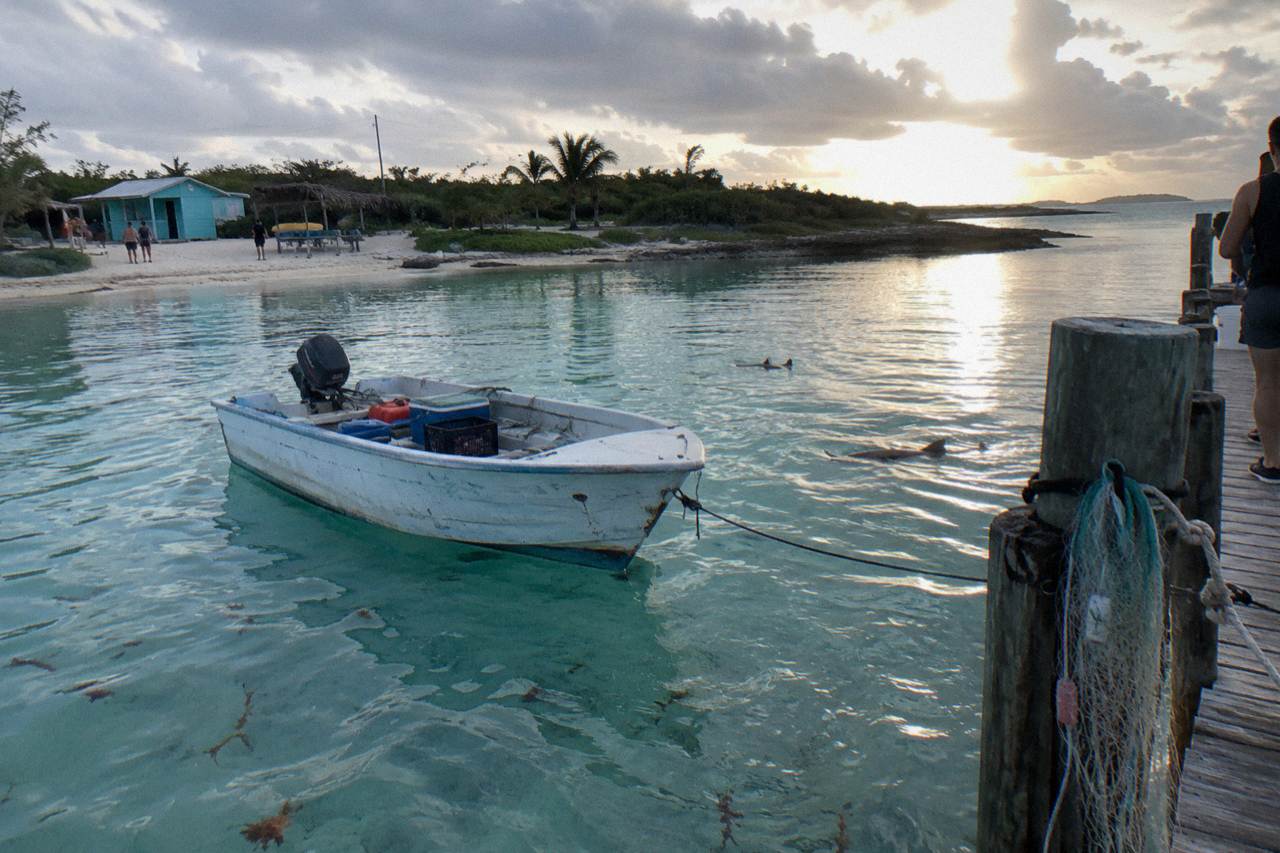
Most people asking this question are really asking two separate things: whether one island is riskier to walk around, and whether one pig swim is riskier to take. The honest answer to the first cannot be ranked from the sources used here, and no crime statistics or government advisory level belongs on this page. The honest answer to the second is more useful, because it can be explained in physical terms: the Exuma trip means a long open-water speedboat run of roughly 82 to 86 miles, operators report, while the Rose Island trips out of Nassau stay inside a 20 to 30 minute hop across calmer water. The safety difference between the two destinations is mostly a sea-state difference, not a crime difference.
No source used here reliably ranks Exuma above or below Nassau on safety, so treat any crime statistic or official advisory level quoted by a travel blog with suspicion and check your own government's current travel advice before booking. What can be compared is the trip itself: Exuma's pig swim involves a long open-water boat ride that operators report as sometimes choppy, while Nassau's Rose Island swims are short crossings, and both run as guided, organized excursions.
The comparison gets framed as a safety question because the two places feel different. Exuma is a chain of small cays with a fraction of Nassau's population, and visitors describe it as quiet and low-key. Nassau is a working capital city, with a cruise port that moves huge crowds through downtown on ship days. Feeling quieter is not the same as being measurably safer, and this page will not pretend otherwise by inventing numbers.
What the sources do support is a different framing. Both destinations sell the same headline experience, swimming with pigs, but the versions sit at opposite ends of a logistics spectrum. The Bahamas Ministry of Tourism names Big Major Cay in the Exuma Cays as the official home of the swimming pigs, with about 20 pigs and piglets on an uninhabited cay. Rose Island, a short boat ride from Nassau, hosts a separate local colony at private beach clubs. Same animals in spirit, very different journeys to reach them.
If safety is what is driving your choice, the practical decision is between a full-day, open-water run and a half-day, protected-water hop, and between how much of the day you want an operator to manage for you. Both can be done sensibly.
What Does Safer Even Mean For A Day Trip?
For a pig swim day trip, safety splits into four questions: the boat ride and sea state, the animals themselves, the sun and heat exposure, and the logistics of getting to the departure point and back. Neither destination wins all four. Exuma adds a long open-water crossing; Nassau adds city traffic, cruise crowds, and a crowded departure scene. The pigs and the sun are roughly equal risks in both places.
Breaking it down this way matters because generic "is X safe" answers blur everything together. A traveler with a bad back, a pregnant traveler, or someone prone to seasickness faces a genuinely different risk profile on the Exuma speedboat run than a family with toddlers does on a Rose Island beach club day. Operators themselves flag this: the listing for the Exuma trips commonly states they are not suitable for pregnant travelers or people with back or neck problems, because of the sustained open-water motion. Rose Island operators tend to be more flexible, sources report, precisely because the crossing is short.
Sun exposure, by contrast, is identical in both places. The Bahamas sits in the tropics with high UV year-round, and both trips put you on open water and open sand for hours with no shade except what the boat and beach clubs provide. Operators recommend sunscreen, a hat, a towel, and a swimsuit for both formats, and several suggest reef-safe products.
The animal question is also close to a wash, and it is covered in full in a later section. For now the short version: pigs can nip when food is present, per traveler and press accounts, and that is true of the Rose Island colony and the Big Major Cay colony alike.
The Boat Ride Is The Real Safety Variable
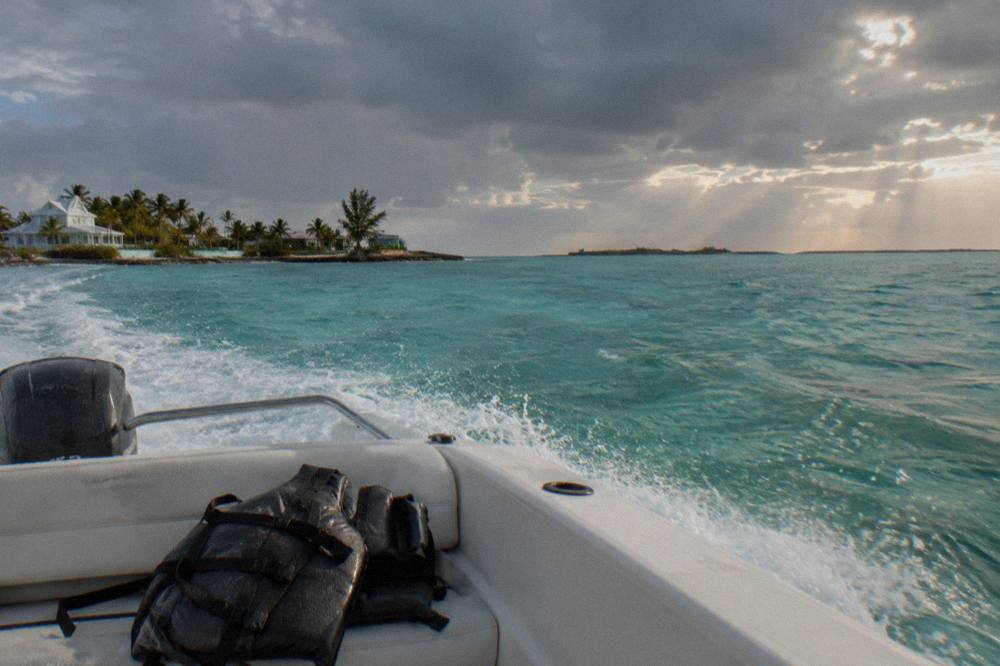
The single biggest safety difference between the two trips is the water crossed to reach the pigs. Operators report the Exuma speedboat run at roughly 82 to 86 miles one way, taking about 1 to 3 hours depending on the vessel and conditions, through open water that can produce steep chop when winds exceed 20 knots. The Rose Island crossing is 20 to 30 minutes each way over a few miles of comparatively sheltered sea.
That is not a small gap. Two to three hours of open-ocean powerboating is a real passage, and it is the reason the Exuma listings carry the health caveats they do. Traveler accounts of the crossing describe it as anything from a thrill ride to a pounding ordeal depending on the day, and seasickness comes up repeatedly in reviews of the long run. The Exuma Cays sit in shallow bank waters that can build short, steep waves quickly in fresh winds, a combination boaters find more tiring than long ocean swells.
The mitigation is structural, not personal. The Exuma trips are run by charter operators with fixed routes, captains who call the weather, and vessels built for the run. You are not crossing the bank alone in a rental. When conditions are wrong, operators cancel, and they typically reschedule or refund, as the season reports put it. A private boater attempting the same crossing without local knowledge is the scenario the safety warnings are really written for, and no reader should attempt it.
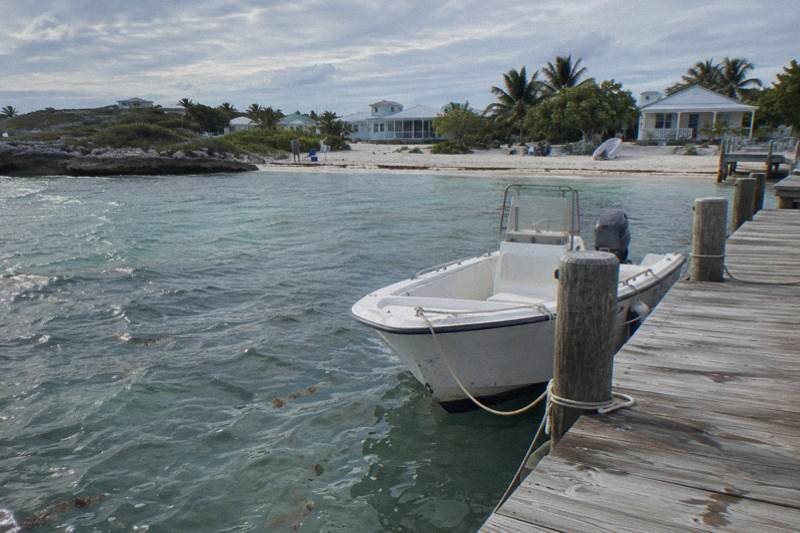
The Nassau-side trips avoid most of this by geography. Rose Island sits roughly 3 to 5 miles from the departure docks, and the crossing stays in sight of land the whole way. The 3 Stops tour run by Sail Tomorrow, from $149 for a 5 hour 30 minute day, covers Athol, Rose and Green Cay without ever leaving the sound, and the Delfincharters turtle snorkel trip, 4.8 from 1,068 reviews, from $150 for 3 hours 30 minutes, works the same protected waters. Neither promises flat water, but neither asks you to sit through an offshore passage either.
Sea State, Seasons, And Canceled Trips
Operators report December to April as the calmer window for the Exuma run, with fresh trade winds and hurricane-season weather producing the choppiest crossings. The Atlantic hurricane season runs June 1 to November 30, per NOAA. Sea temperatures range from roughly 23 to 26 degrees Celsius in winter to 29 to 31 in late summer, all approximate, which shapes both comfort and how rough a given wind feels on the water.
The seasonal pattern is consistent across operator reports: winter and early spring bring the most settled seas for the long crossing, while summer and early fall bring higher humidity, warmer water, and a greater chance that a given departure day gets called for wind or weather. Cancellations on the Exuma boat tours are described as common when seas are rough, with operators typically rescheduling or refunding rather than running a miserable trip. None of this is a forecast, and no named storm or season prediction belongs on this page beyond the official dates.
The NOAA seasonal outlook page states the season boundaries, June 1 to November 30, and whatever the outlook for a given year, the practical takeaway is the same: book with free cancellation, keep a flexible day in your itinerary, and expect that a responsible operator may move your trip.
| Month | Approx. sea temperature | Reported conditions for the Exuma run |
|---|---|---|
| January | 23 to 25 C | Often calm, occasionally fresh trades |
| April | 25 to 27 C | Reported as part of the calmer window |
| July | 29 to 31 C | Warm water, higher chance of squalls |
| September | 29 to 31 C | Peak hurricane season, more cancellations |
| November | 26 to 27 C | Shoulder month, quieter bookings |
Rose Island trips run on the same calendar but with more slack. Because the crossing is minutes rather than hours, a windy day that would scrub an Exuma run often still allows a shortened or rerouted Nassau-side trip. If your travel dates are locked to the wetter months and your group includes anyone motion-sensitive, that resilience is a genuine safety consideration, not just a convenience.
The Pigs Themselves: Nips, Food, And Common Sense
Traveler and press accounts report that pigs can nip when food is present, and that is the extent of what the sources support: no injury statistics belong on this page. The risk profile is the same at Rose Island and Big Major Cay. The guidance that holds everywhere is to follow your guide's instructions on feeding, keep food out of open hands and unzipped bags, and give the larger animals space.
The accounts behind this are consistent across years and across both colonies: pigs are food-motivated, they associate boats and humans with being fed, and the largest animals push hardest when food appears. The injuries described in traveler accounts are nips, bruises, and occasionally infections requiring antibiotics, which is why the framing here stays qualitative rather than statistical. A bite that breaks skin anywhere in the tropics warrants proper cleaning and medical attention.
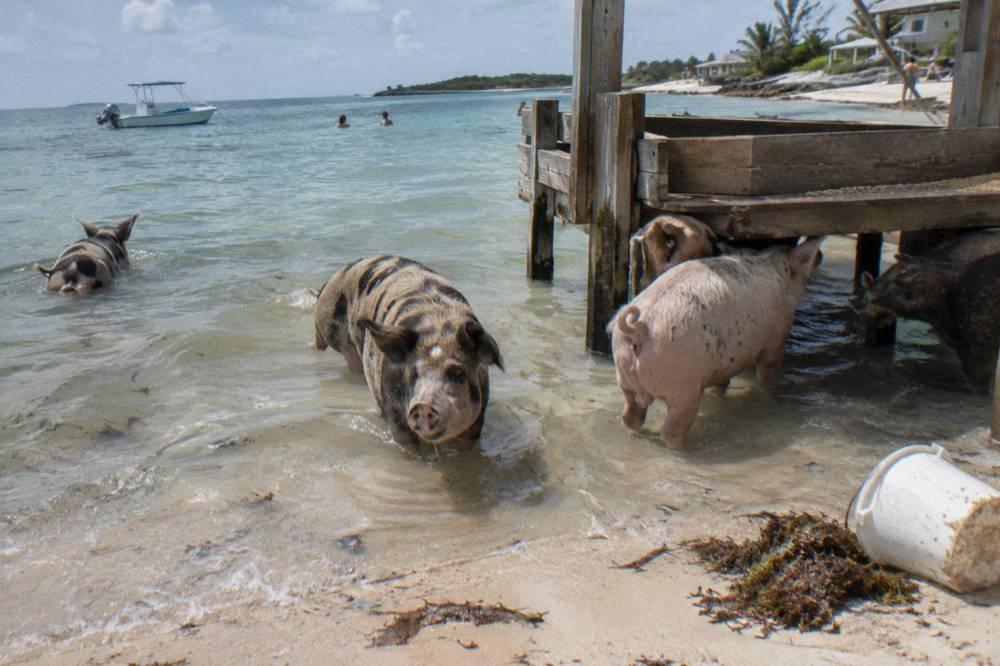
The colonies themselves differ in character, though not in the basic rules of engagement. The Big Major Cay pigs, about 20 of them per the Ministry of Tourism's page, are the famous open-beach swimmers, and the Exuma tours bring food ashore as part of the visit. The Rose Island pigs are a separate local colony at private beach clubs, and the interactions there are managed by the club staff and tour guides on a controlled beach.
The welfare angle has its own page, and it connects to safety more than visitors expect: a calm, unhurried animal is a safe animal. If ethics questions are shaping your choice of operator, the swimming pigs ethics guide walks through what to look for.
Rose Island Versus Big Major Cay, Practically
The Ministry of Tourism identifies Big Major Cay in the Exumas as the official home of the swimming pigs, reached as a full-day tour from Nassau or from the Exumas themselves. Rose Island is a separate, local colony minutes from Nassau, sold as half-day beach club visits. Neither is inherently the safer animal experience; the Exuma version simply costs more travel, more time, and more open water to reach.
Choosing between them on safety grounds mostly reduces to choosing between trip formats. The Exuma day is 6 to 8 hours door to dock to door, with the crossing, multiple stops such as iguanas and nurse sharks, a lunch stop, and the pig beach visit folded into one guided itinerary. The Rose Island day is 2 to 6 hours, anchored to a beach club with chairs, restrooms, and a fenced-in sense of order that families with small children tend to appreciate.
Price tracks the difference. Rose Island group tours run from $75 to $258 per person on this site's roster, from the Sand Dollar resort day at from $75 to the Sandy Toes full day at from $258, while the Exuma days run from $378 to $850, with the flown premium tours at the top. A family weighing risk is also weighing a 4 figure outlay versus a low 3 figure one for the same photograph.
| Format | Boat time each way | Typical total day | Roster price floor |
|---|---|---|---|
| Rose Island beach club day | 20 to 30 minutes, operators report | 2 to 6 hours | from $75 |
| Multi-stop snorkel combo from Nassau | Varies, protected waters | 2 hours 30 minutes to 5 hours 30 minutes | from $122.85 |
| Exuma speedboat day | 1 to 3 hours, sources disagree | 8 hours | from $378 |
| Exuma by plane, premium | 30 to 45 minute flight | 6 to 12 hours | from $850 |
The water taxi trip run by Tour Daddy, from $89 with a 4.5 rating from 656 reviews, is the stripped-down version of the Rose Island day: entry fee and guide included, no meal, and the pigs plus the beach as the whole show. It is a good example of how little exposure the Nassau-side format actually requires.
The Logistics Argument For A Guided Exuma Day Trip
Readers comparing safety can do Exuma as a guided day trip, and that single choice neutralizes most of the risk the destination adds. A booked tour means a captain who decides whether the sea is right, a vessel suited to the crossing, a fixed itinerary of organized stops, and a schedule built to return before dark. The alternative, reaching the Exuma pigs independently, means arranging boats and connections yourself in a place with limited infrastructure.
This is the point where the safety question becomes a booking question. The Exuma pigs are not something you drive to. Reaching Big Major Cay independently means a flight or ferry to the Exumas, then a local boat charter from Staniel Cay or elsewhere, coordinated across providers, in a chain where any weak link lands you stuck or offshore late. The tour operators run this exact route weekly and cancel it when it is wrong.
The featured listing on this site, the Exuma powerboat day trip with swimming pigs, run by Aqua Shores, is the format in one line: from $439, 8 hours, 4.8 from 536 reviews, lunch, beer, bottled water and snacks included, departing the Paradise Island Ferry Terminal, free cancellation listed. The Born Free Charters island hopping trip at from $438.90, 4.8 from 688 reviews, covers the same waters with a restaurant lunch and a restroom on board, a detail that matters to anyone nervous about the crossing. Both handle the stops, the timing, and the go or no-go call.
The listing describes these days as all-inclusive runs with the pig beach stop among several, and that breadth is itself a safety feature: you are never an unaccompanied visitor on an unfamiliar cay, you are one of a small group moving on a known schedule. Guests on the 7 stop Exuma Elite Escape, from $850 with hotel pickup listed and flights included, average 8 per boat per the listing, an intentionally small load.
None of this makes a guided trip risk-free, and the seasickness, sun, and animal caveats all still apply. It makes the risks the ones you accepted knowingly, on a vessel with a crew whose job includes managing them.
Nassau-Side Safety: Crowds, Traffic, And Common Sense
Nassau's safety conversation is a city conversation, not a pig conversation: cruise crowds, traffic around the port, and the ordinary precautions of any capital. The pig trips themselves depart from organized meeting points such as the waterfront at Woodes Rodgers Walk, and several listings include hotel pickup. The standard advice applies: keep valuables minimal, use the meeting points as described on the listing, and check your government's current travel advice.
The departure scene in Nassau is busier than anything Exuma offers, and on days when multiple ships are in, downtown Nassau is dense with visitors. The Nassau cruise port guide covers the layout in detail, but the safety-relevant point is simple: the pig tour meeting points are established, well-trodden locations, and the walk from the port to most of them is short and populated. Travelers report the usual city issues, opportunistic theft among them, and the usual city habits prevent most of them.
Traffic is the underrated one. Nassau drives on the left, roads around the port are busy, and visitors walking from the terminal to a meeting point while reading a phone are the standard near-miss story. Allow more time than the map suggests, and if your listing includes hotel pickup, take it.
For cruise passengers specifically, the timing math deserves a sentence: independent bookings are the roster listings, excursion menus vary by line and sailing, and the all-aboard window is typically 30 to 90 minutes before departure per port reports. A Rose Island trip that returns with hours to spare is a different risk proposition than a full-day run that returns at 4:30 PM against a 6 PM sailing.
So Which Should A Cautious Traveler Choose?
Choose by the risk you can tolerate, not by a ranking that does not exist. Motion-sensitive travelers, pregnant travelers, and families with very young children are better served by the short Rose Island crossings. Confident swimmers who want the famous beach and can absorb a long, sometimes bumpy day get it on a guided Exuma tour. Neither choice is unsafe, and neither is guaranteed calm water: book with free cancellation listed and let the operator make the call.
The pattern that holds across every account: the travelers who report the worst experiences on either side are the ones who booked the wrong format for their body or their schedule, a 8 hour offshore run with a seasickness history, or a port day squeezed too tight for the return. The destinations are not the variable. The format is.
A reasonable middle path exists, and the multi-stop combos from Nassau are it: the Sail Tomorrow catamaran day at 4.9 from 414 reviews, or the Shore To Shore 3 islands trip at 4.3 from 3,591 reviews, from $149 and from $122.85 respectively, both touching Rose Island and turtle spots without the offshore commitment. For many cautious travelers that format is the honest answer to this whole question.
Where the Exuma version wins, it wins on the strength of the thing itself: the official colony, the open beach, the sandbars and sharks and grotto stops that only exist out there. Deciding that the reward justifies a long boat day is a legitimate decision, and Swim With Pigs Nassau exists to help you make it with your eyes open rather than talk you out of it.
Common Questions About Exuma Versus Nassau Safety
Is Exuma Safer Than Nassau?
It cannot be ranked from the sources used here, and no crime statistic or advisory level is printed on this page. Check your own government's current travel advice. The measurable difference is the trip: Exuma adds a long open-water boat ride, while Nassau's pig swims are short crossings, and both run as guided excursions.
Is The Boat Ride To The Exuma Pigs Dangerous?
Operators report the one-way run at roughly 82 to 86 miles, taking about 1 to 3 hours, and it can be choppy in winds over 20 knots. The listings flag it as unsuitable for pregnant travelers and people with back or neck problems. Tour operators cancel in rough conditions and typically reschedule or refund.
Do The Pigs Bite?
Pigs can nip when food is present, per traveler and press accounts. No injury statistics are printed here. Follow your guide's instructions on feeding, keep food secured, and give the larger animals space. A bite that breaks skin should be cleaned and treated properly.
What Is The Safest Pig Swim For Kids Or Nervous Swimmers?
The Rose Island beach club format: a 20 to 30 minute crossing, a controlled beach, chairs and restrooms, and a 2 to 4 hour total day. Roster options run from $75 to $258 per person. Check each listing for its minimum age, which varies by operator.
When Is The Exuma Crossing Calmest?
Operators report December to April as the calmer window. Hurricane season runs June 1 to November 30 per NOAA. Sea temperatures run approximately 23 to 26 degrees Celsius in winter and 29 to 31 in late summer, and rougher days concentrate in the warmer months.
Should I Book A Tour Or Go Independently?
A guided day trip handles the logistics and keeps you on organized stops, which is the safer choice for Exuma, where independent access means arranging flights or ferries plus local boats yourself. From Nassau, the Rose Island trips are simple enough that either approach works, but a booked tour still fixes the timing and the meeting point.